

In October 2024, Turkish steel exporters turned their route toward the Caucasus. Led by the Steel Exporters’ Association (ÇİB), the Azerbaijan Sectoral Trade Delegation takes place in Baku on 16-18 October 2024, bringing Turkish steel companies to the same table as Azerbaijani importers.
What makes this delegation special is that Azerbaijan is not just a target market, but a key link in the trade corridor extending across the Caspian to Central Asia. In the words of Yakup Sefer, Chief Commercial Counsellor at the Turkish Embassy in Baku: “Azerbaijan is the gateway to Eurasia.”
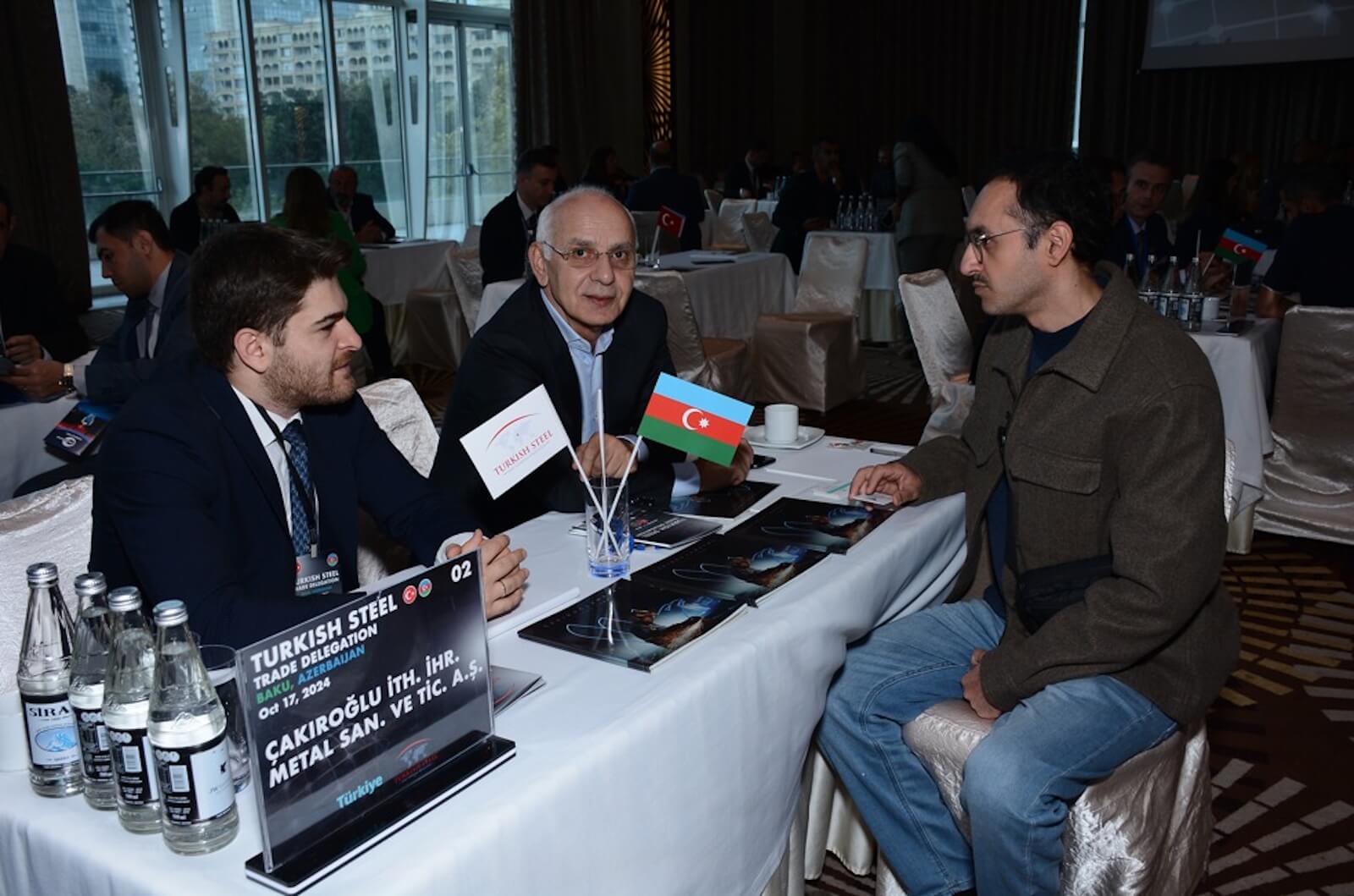
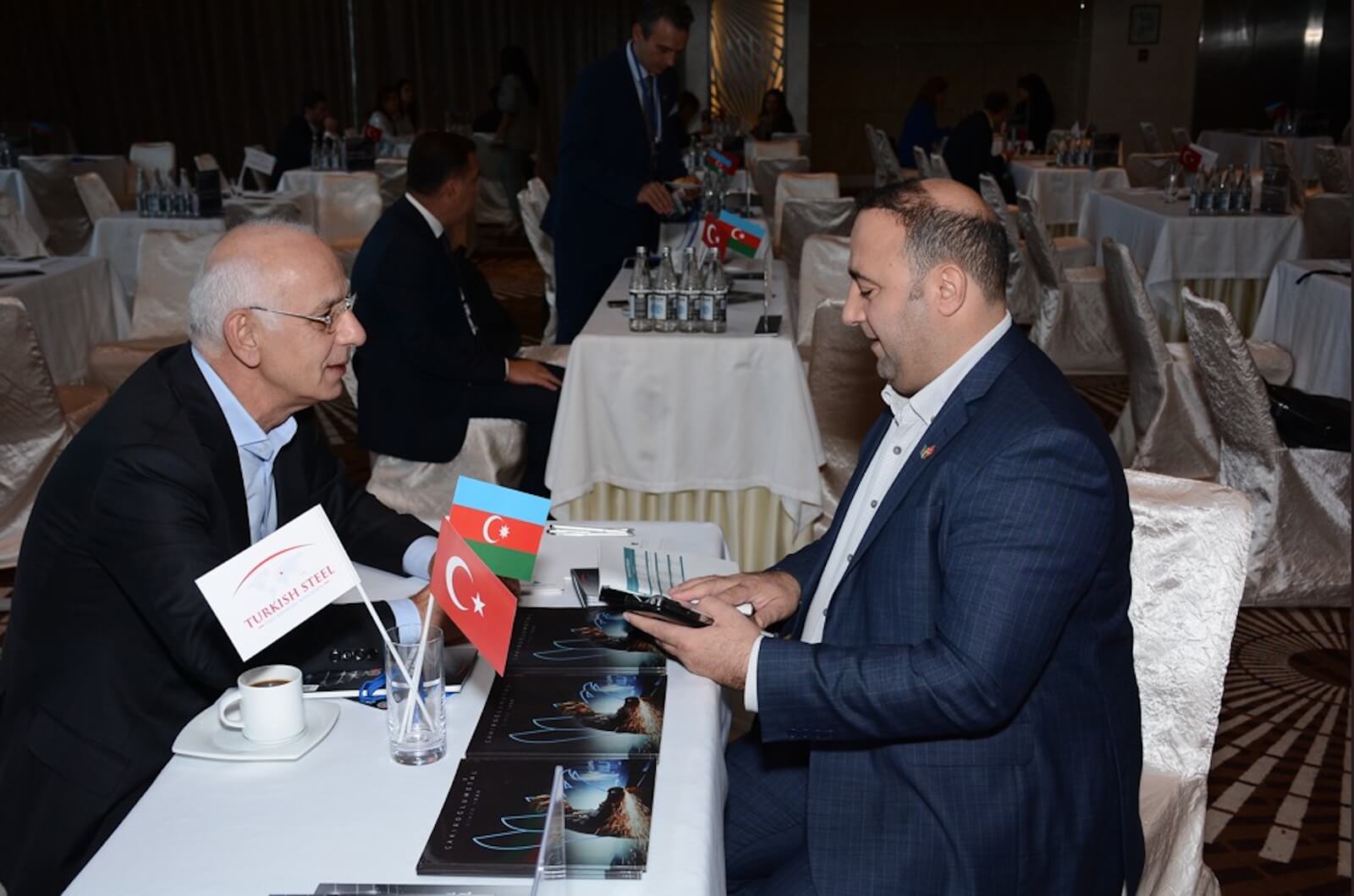
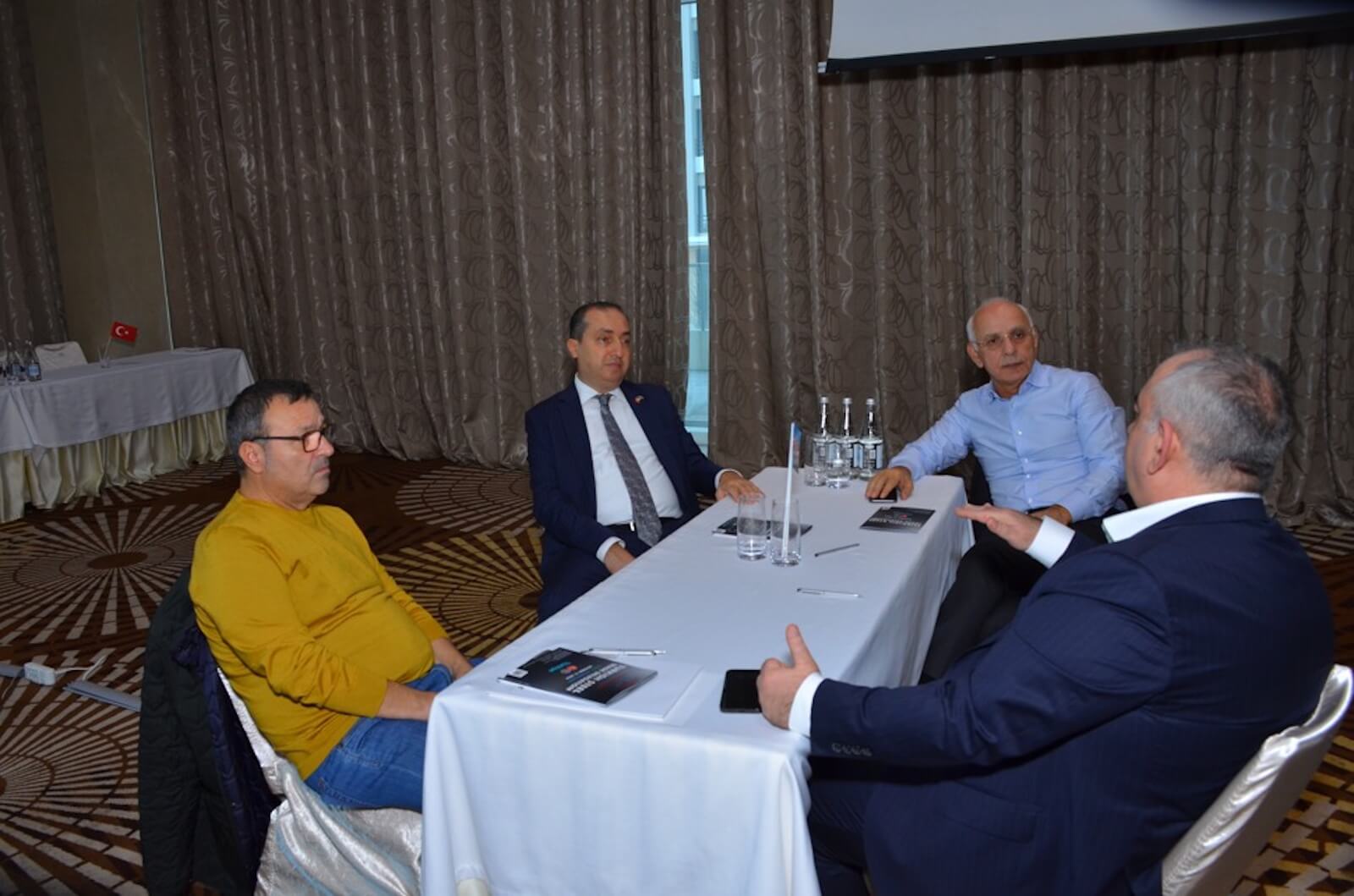
The Azerbaijan Sectoral Trade Delegation was planned by ÇİB to increase the trade volume between the two countries and establish new partnerships. The delegation is headed by ÇİB Chairman Adnan Aslan. At the heart of the program are the B2B meetings held on Thursday, 17 October at the JW Marriott Absheron Baku Hotel.
| Delegation Profile | Details |
|---|---|
| Event | Azerbaijan Sectoral Trade Delegation |
| Organizer | Steel Exporters’ Association (ÇİB) |
| Head of Delegation | Adnan Aslan, ÇİB Chairman |
| Dates | 16-18 October 2024 |
| B2B meeting day | 17 October 2024, 10:00-18:00 |
| Venue | JW Marriott Absheron Baku Hotel, Baku |
| Participation | 21 companies / 33 representatives |
| Target market | Azerbaijan and the Caspian basin |
The event opened with a presentation by Commercial Counsellor Sefer on Azerbaijan’s economy and its trade relations with Türkiye, followed by B2B meetings between Turkish and Azerbaijani companies.
The relationship between Türkiye and Azerbaijan goes far beyond an ordinary bilateral trade partnership. Two peoples descending from the same Oghuz roots share a common language, history and cultural heritage. The phrase “Two states, one nation,” voiced by Heydar Aliyev and embraced in both countries today, has become the simplest definition of this bond.
This closeness has also been reflected in concrete milestones:
| Date | Milestone |
|---|---|
| 9 November 1991 | Türkiye became the first country to recognize Azerbaijan’s independence |
| 2006 | The Baku-Tbilisi-Ceyhan Crude Oil Pipeline became operational |
| 2017 | The Baku-Tbilisi-Kars Railway opened |
| 2018 | Azerbaijani gas reached Türkiye via TANAP |
| 15 June 2021 | The Shusha Declaration elevated relations to the level of alliance |
For two countries physically connected by energy lines and railways, trade is a natural extension of this brotherhood. The Azerbaijan Sectoral Trade Delegation aims to turn the trust built on shared roots into lasting partnerships in the steel sector. With no need for interpreters and mutual trust already in place, agreements take shape much faster.
Trade between the two countries made a significant leap in 2023. According to the State Customs Committee of Azerbaijan, Türkiye became Azerbaijan’s second-largest trading partner after Italy, with bilateral volume rising 31% year-on-year to USD 7.65 billion.
| Türkiye–Azerbaijan Foreign Trade (2023) | Value |
|---|---|
| Trade volume (Azerbaijani data) | USD 7.65 billion |
| Change vs. 2022 | +31% |
| Türkiye’s exports (Turkish data) | ~USD 2.7 billion |
| Türkiye’s imports (Turkish data) | ~USD 1.4 billion |
| Türkiye’s rank among Azerbaijan’s partners | 2nd |
| Target announced by the Presidents | USD 15 billion |
Source note: Volume data is based on the State Customs Committee of Azerbaijan; the export/import breakdown is based on Turkish data from the DEİK Türkiye-Azerbaijan Business Council. As the two countries use different recording methods (energy trade and country-of-origin basis), the figures do not correspond one-to-one.
Türkiye’s total exports to the Turkic Republics also rose 26.9% in 2023 to USD 10.2 billion. The Azerbaijan Sectoral Trade Delegation aims to strengthen the steel pillar of this regional momentum.
According to figures shared with the press by Armağan Vurdu, Secretary General of the Istanbul Minerals and Metals Exporters’ Associations (İMMİB) and a member of the delegation, 64 thousand tonnes (7.5%) of Azerbaijan’s approximately 850 thousand tonnes of steel trade in 2023 was conducted with Türkiye.
| Indicators | Value |
|---|---|
| Azerbaijan steel trade volume (2023) | ~850 thousand tonnes |
| Türkiye’s share | 64 thousand tonnes |
| Ratio | 7.5% |
Given the geographical proximity and strong political ties, this share points to considerable room for growth. Vurdu also noted that steel is among Türkiye’s top five export sectors and emphasized the need to deepen relations on the basis of mutual benefit.
Azerbaijan’s appeal can be summed up under three headings:
For this reason, the Azerbaijan Sectoral Trade Delegation should be read less as a sales opportunity in a single country and more as a chance to position along a supply route extending to the Caucasus and Central Asia.
Since 1969, Çakıroğlu Metal has been delivering rebar, profiles, flat products and steel mesh from our stock yard in Tuzla to all 81 provinces of Türkiye and to export markets. We closely follow the reconstruction process in the Caucasus with our wide product stock and well-planned distribution network. Meeting regional demand with timely, standard-compliant supply is among our priorities.
The Azerbaijan Sectoral Trade Delegation is one of the concrete steps in the steel sector toward bilateral trade that grew by 31% and a joint target of USD 15 billion. Türkiye’s 7.5% share in Azerbaijan’s steel trade points to potential that can be expanded through direct contacts like this delegation. The steps taken in Baku lay the groundwork for partnerships that will make Turkish steel’s presence in the Caucasus and Central Asia a lasting one.
News Source

17.October.2024


